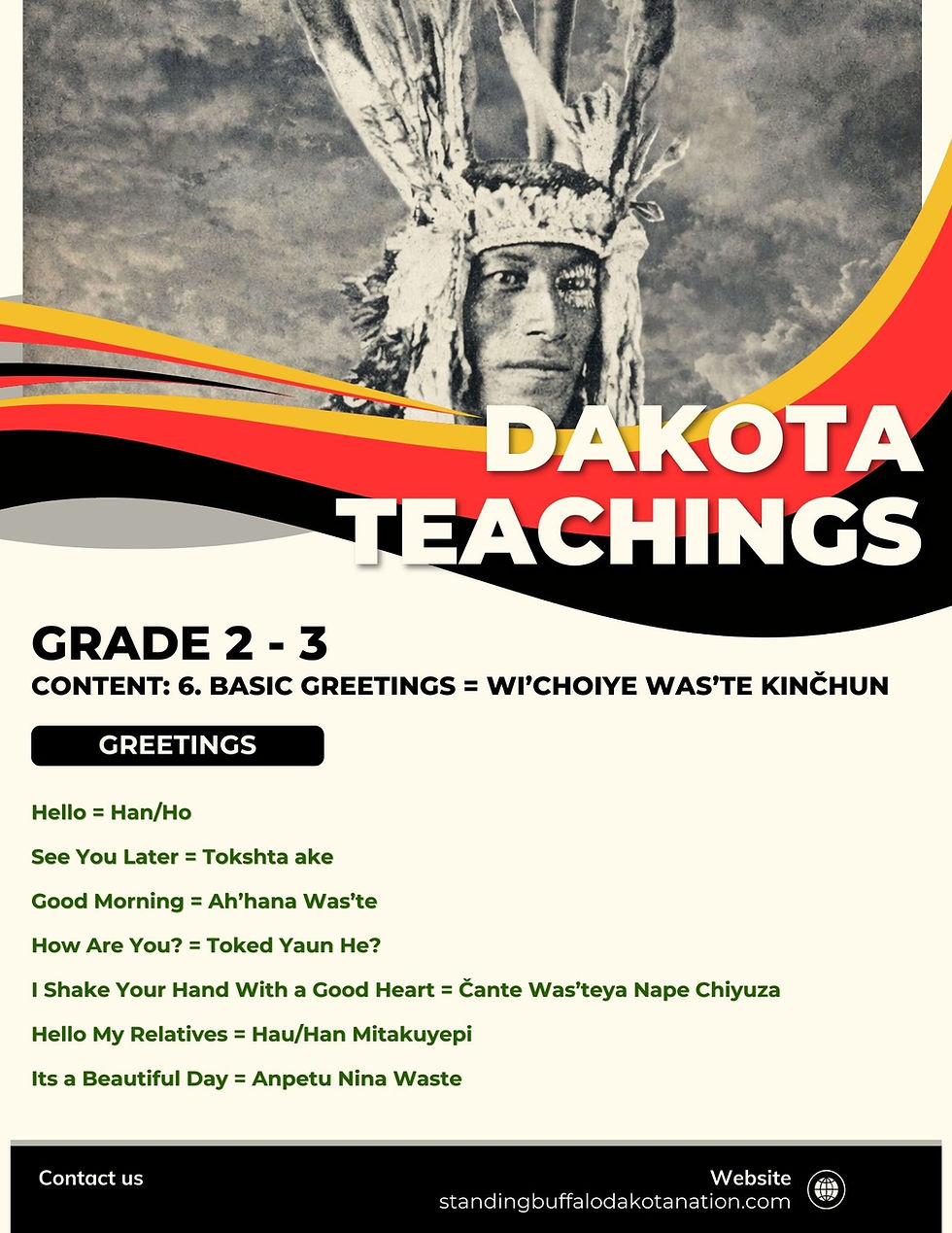
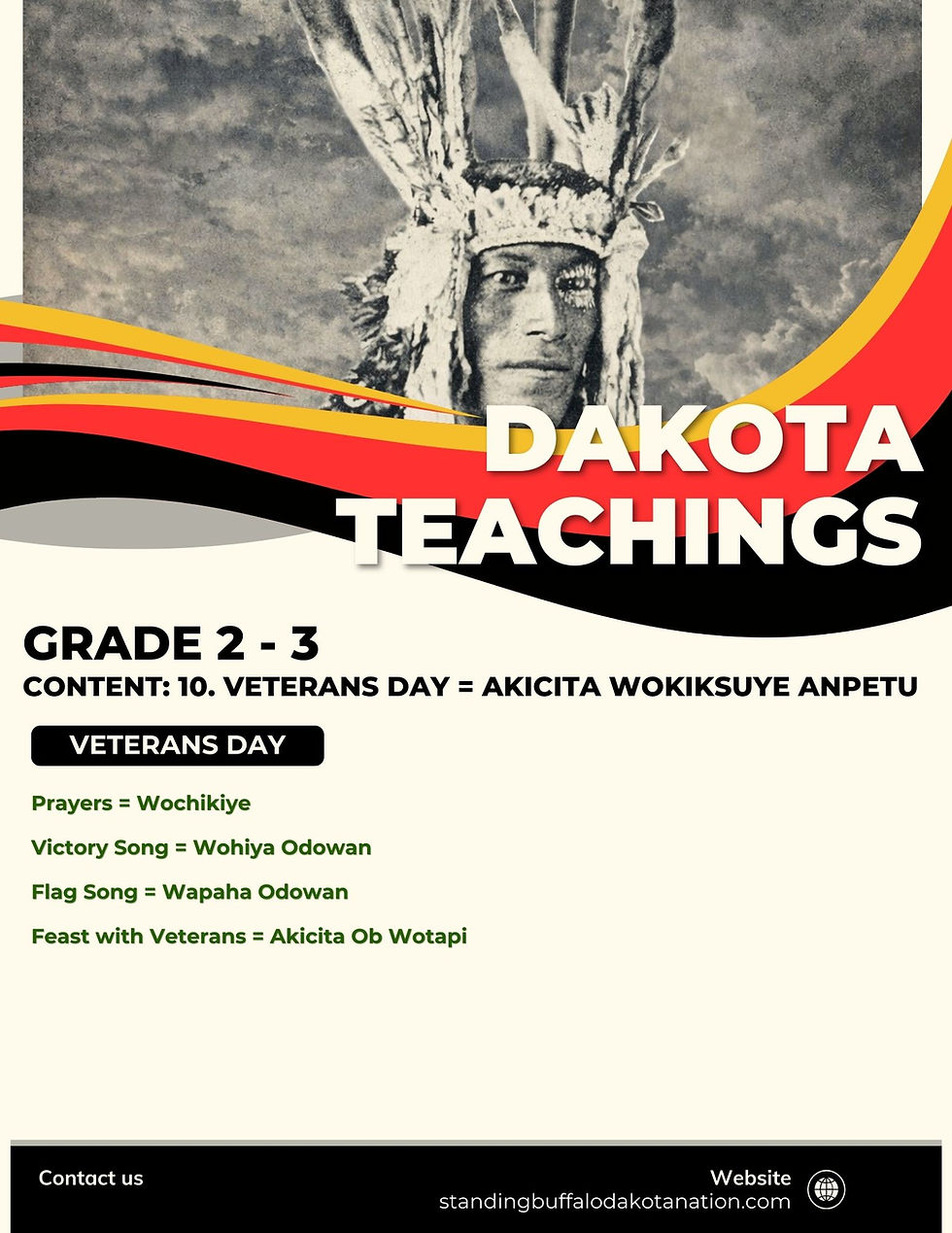
DAKOTA TEACHINGS
Language is life. When the Dakota language lives, Dakota culture, history, and nationhood continues to thrive.
Maintaining the Dakota language is deeply important to the people of Standing Buffalo Dakota Nation,. Language is not just a tool for communication—it is the foundation of identity, spirituality, governance, and cultural continuity.
Here are the key reasons why preserving the Dakota language matters:
1. Cultural Identity and Nationhood
The Dakota language carries the worldview, values, and identity of the Dakota people. Words and expressions reflect relationships to land, kinship systems, ceremonies, and traditional laws. Losing the language would mean losing unique ways of understanding the world that have existed for generations.
For Standing Buffalo Dakota Nation, language strengthens nationhood and affirms their distinct Dakota identity within Canada.
2. Connection to Ancestry and Elders
The Dakota language connects younger generations to their Elders and ancestors. Many traditional teachings, stories, songs, and ceremonies are best understood in Dakota. Translation often cannot capture the full spiritual and cultural meaning embedded in the language.
Maintaining the language:
-
Honors ancestors who protected it despite colonization
-
Preserves oral histories
-
Ensures cultural teachings remain authentic
3. Healing and Reconciliation
Like many Indigenous communities, Standing Buffalo Dakota Nation was impacted by residential schools and assimilation policies that suppressed Indigenous languages. Revitalizing Dakota is a form of healing and resistance.
Language revitalization:
-
Restores pride
-
Strengthens mental and emotional well-being
-
Rebuilds intergenerational bonds
-
Supports reconciliation efforts in Canada
4. Spiritual and Ceremonial Importance:
Dakota ceremonies, prayers, and sacred songs are rooted in the language. Certain spiritual concepts do not translate fully into English. Maintaining the language ensures that ceremonial practices remain intact and meaningful.
5. Education and Youth Empowerment
Teaching Dakota in schools and community programs:
-
Builds confidence in youth
-
Encourages cultural pride
-
Strengthens academic engagement
-
Creates future language teachers and leaders
Language revitalization efforts often include immersion programs, community classes, digital resources, and Elder-led instruction.
6. Sovereignty and Self-Determination:
Language is a key element of Indigenous sovereignty. For Standing Buffalo Dakota Nation, maintaining Dakota supports governance systems, traditional laws, and cultural autonomy. It affirms their right to preserve and promote their heritage under Canadian and international Indigenous rights frameworks.
7. Land and Environmental Knowledge:
Dakota place names and vocabulary reflect deep knowledge of the land, animals, plants, and seasonal cycles. Protecting the language also protects ecological knowledge that has been passed down for generations.
In Summary
For Standing Buffalo Dakota Nation, maintaining the Dakota language is about:
-
Protecting identity
-
Honoring ancestors
-
Healing from colonial harm
-
Preserving ceremony and spirituality
-
Empowering youth
-
Strengthening sovereignty